
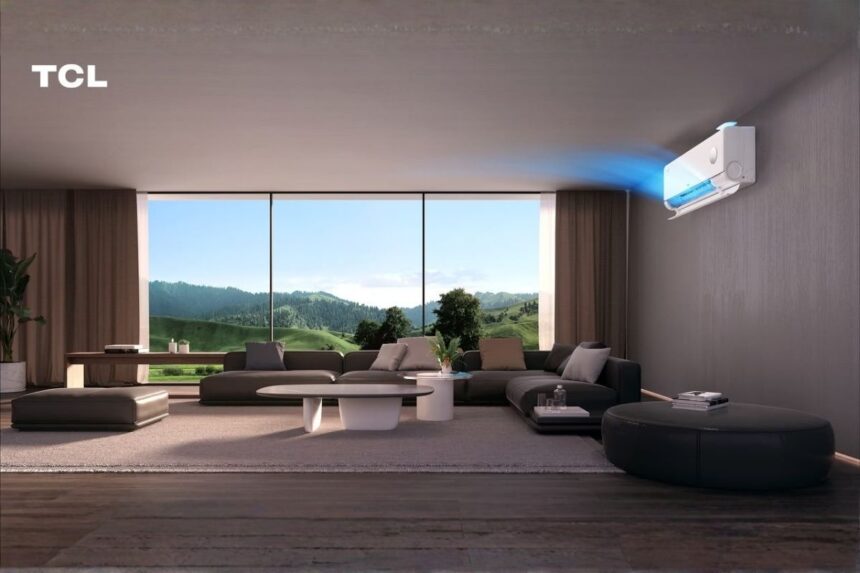
IndonesiaBrief.com – TCL’s new FreshIN 3.0 AC and VoxIN AC promise cleaner indoor air and hands-free control. The ambitions are welcome. The claims deserve scrutiny.
For many families in Indonesia’s cities, the air outside is a problem to be managed. Dust, fine particulate matter known as PM2.5 and other pollutants do more than make life uncomfortable; they can raise the risk of respiratory illness, including acute respiratory infections known by the acronym ISPA. And because so much of daily life is spent indoors, the quality of the air inside the home has become a matter of family health, not merely comfort.
It is against this backdrop that TCL, the global electronics brand, introduced two new air conditioners in Jakarta on Thursday: the FreshIN 3.0 AC and the VoxIN AC.
The first is pitched as a purifier as much as a cooler. It draws fresh air in from outside and passes it through four layers of filtration, including a HEPA filter and a silver-ion antibacterial layer. The company says the system can capture up to 97.66 percent of PM2.5 particles, along with allergens and odors. It also reports a noise level as low as 16 decibels, a design meant to spread cool air gently through 1,422 micro-perforations rather than blast it at the occupant, and artificial intelligence that it says can cut energy use by up to 70 percent compared with a standard unit and more than 37 percent compared with other inverter models.
The second, the VoxIN AC, emphasizes convenience. Its voice control works offline, in Indonesian, and responds to commands as plain as “Nyalakan AC” (“turn on the AC”) and as casual as “Panas banget” (“it’s so hot”). Both models connect to the TCL HOME app, which lets owners adjust settings remotely and view their electricity consumption in charts.
There is much here to like. A voice interface that does not depend on an internet connection, and that understands a local language, is a practical step toward making smart-home technology useful to more people. So is a tool that lets households see how much power their cooling actually uses, at a time when energy costs and climate concerns are rising together.
But readers should keep a sensible distance from the headline numbers. The figures on filtration, noise and energy savings are the manufacturer’s own. Filtration rates depend on testing conditions, and savings depend on the baseline chosen for comparison. Consumers, and the regulators who serve them, should ask for independent verification, and for clarity on how often filters must be replaced and at what cost.
“Consumers in Indonesia now want more than coolness,” said Evan Tang, chief executive of TCL Indonesia. “They want better air quality and comfort that is integrated with smart technology.”
He is right about that. The harder question is whether a machine in the living room can do the work that cleaner air ultimately demands of cities and governments. An air conditioner can protect one room. It cannot clear the sky. Still, for families who cannot wait for that, a quieter, cleaner and more efficient appliance is a modest but real improvement, provided it delivers what it promises.