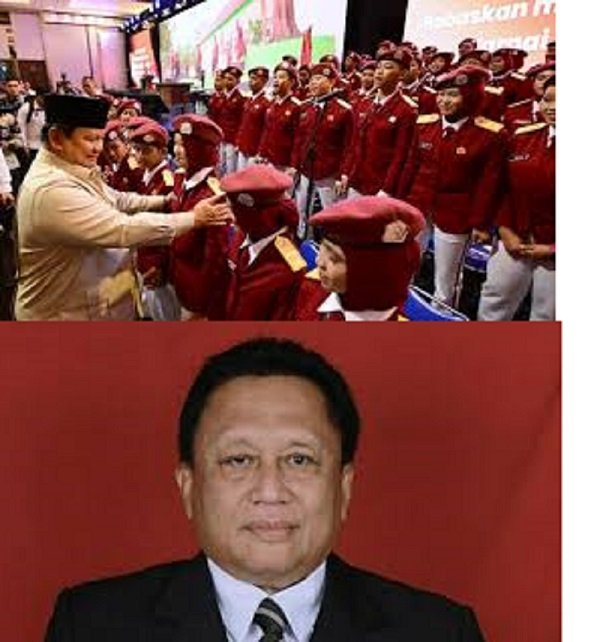
On Monday, Jan. 12, 2026, President Prabowo Subianto inaugurated 166 Sekolah Rakyat (People’s Schools) simultaneously across 34 provinces, with the main ceremony held in Banjarbaru, South Kalimantan.
This initiative is part of the government’s broader target to operate a total of 200 Sekolah Rakyat by 2026, supporting the long-term vision of Indonesia Emas 2045.
Unlike conventional schools, Sekolah Rakyat are specifically designed for children from underprivileged families registered in the National Integrated Socio-Economic Data system.
By relying on unified and verified data, the government aims to build intelligence and human capital among the younger generation, breaking the cycle of extreme poverty through inclusive and structured access to education.
The focus of this program goes beyond classrooms and buildings. It directly addresses students’ basic needs — including uniforms, meals and dormitories — so that economic hardship no longer becomes a barrier to learning. Systemic poverty is often hereditary.
Children born into poor families tend to remain poor due to limited access to nutrition and quality education. Sekolah Rakyat seeks to intervene decisively at this critical juncture.
Inclusive education as a national strategy
The launch of Sekolah Rakyat sends a strong message: the development of high-quality human resources must not be concentrated solely in major cities or among middle- and upper-income groups.
The establishment of 166 new schools represents a concrete effort to equalize educational quality nationwide.
This aligns with Indonesia’s 2045 targets, which emphasize that educational transformation must reach marginalized communities.
Sekolah Rakyat functions as a bridge for children in remote and disadvantaged areas, enabling them to acquire competencies comparable to their peers elsewhere as they face global challenges.
Importantly, Sekolah Rakyat is not a standalone initiative. It complements the Sekolah Garuda (Elite Schools) program, which focuses on science, technology, engineering and mathematics (STEM), as well as innovation.
Building a dual-track education ecosystem is crucial: Sekolah Rakyat ensures the fulfillment of basic rights and poverty alleviation, while Sekolah Garuda cultivates elite technological talent.
The synergy between the two is expected to strike a balance between social justice and national competitiveness.
A global perspective
Indonesia’s move has drawn positive attention from the international education community. Andreas Schleicher, Director for Education and Skills at the OECD, has repeatedly emphasized that separating economic constraints from the learning process is a key determinant of national success. Education remains the most effective instrument for vertical social mobility.
What Indonesia is doing through Sekolah Rakyat echoes the principle of equality practiced in Finland, where there is virtually no quality gap between schools in remote villages and those in central Helsinki. The Finnish government covers students’ living costs so their sole focus is learning.
Indonesia also appears to be learning from Vietnam’s experience. Vietnam achieved a remarkable leap in PISA (Programme for International Student Assessment) scores through consistent policies that ensured high-quality education access for children of farmers and laborers in rural areas.
Vietnam has shown that poverty is not a barrier to intelligence when the state provides robust nutritional support and adequate learning facilities.
Implementation challenges
Despite its promise, this ambitious program will not be easy to implement. Challenges on the ground range from parental skepticism toward new initiatives to the accuracy of data verification. Without reliable data, assistance risks missing its intended beneficiaries.
Dr. Linda Darling-Hammond, a leading education policy expert from Stanford University, warns that physical infrastructure represents only half of the battle. Students from low-income backgrounds often carry the psychological trauma of poverty into the classroom.
Therefore, Sekolah Rakyat must offer strong psychosocial support and be staffed by the best teachers — not leftover or underqualified ones — if it truly aims to break the poverty cycle.
Long-term success will also depend on budgetary consistency. In 2026, Indonesia’s education budget reaches Rp 757.8 trillion, a 9.8 percent increase from the previous year.
This impressive figure reflects strong political will to place education above all else. However, strict oversight is non-negotiable. Past experiences show that fund leakages at the regional level can derail even the most well-intentioned programs.
The government must implement real-time, digital-based audit systems to ensure that every rupiah allocated reaches students’ meals and dormitory facilities. Building 200 Sekolah Rakyat with such a substantial education budget is not merely public spending; it is a “backdoor strategy” to safeguard the state budget in the future by reducing long-term social costs.
Toward Indonesia Emas 2045
With this inauguration, the government positions education not merely as a public service, but as a strategic investment. Sekolah Rakyat is expected to become a crucible where children from underprivileged families are shaped not just to survive, but to compete.
If this program is maintained consistently over the next two decades, then by 2045, the children who today enter Sekolah Rakyat in Banjarbaru or Merauke may emerge as industry leaders, technocrats and entrepreneurs — individuals no longer burdened by the poverty of their past.
Indonesia is making a bold bet on its people. History shows that investing in education is the only wager that never loses. With an inclusive and empowered human capital foundation, the transition toward Indonesia Emas will no longer be a political slogan, but a lived reality — built one classroom at a time.
Dr. Eko Wahyuanto is a lecturer, researcher and social-political observer.